

More In Case Studies & White Papers
Latest Articles
L-Arginine HCl Injection: Biochemical Mechanisms, Pharmacokinetics, and Clinical Prescribing Considerations
L-arginine is a conditionally essential amino acid...

Optimizing Metabolic Protocols: The Synergistic Role of Levocarnitine, L-Arginine, and Active B12
Medical weight management continues to evolve as p...
Overcoming Formulation Challenges in Sterile Peptide Injectables and Complex Therapeutics
Peptide therapeutics and complex coenzymes represe...
Overcoming Formulation Challenges in Sterile Peptide Injectables and Complex Therapeutics
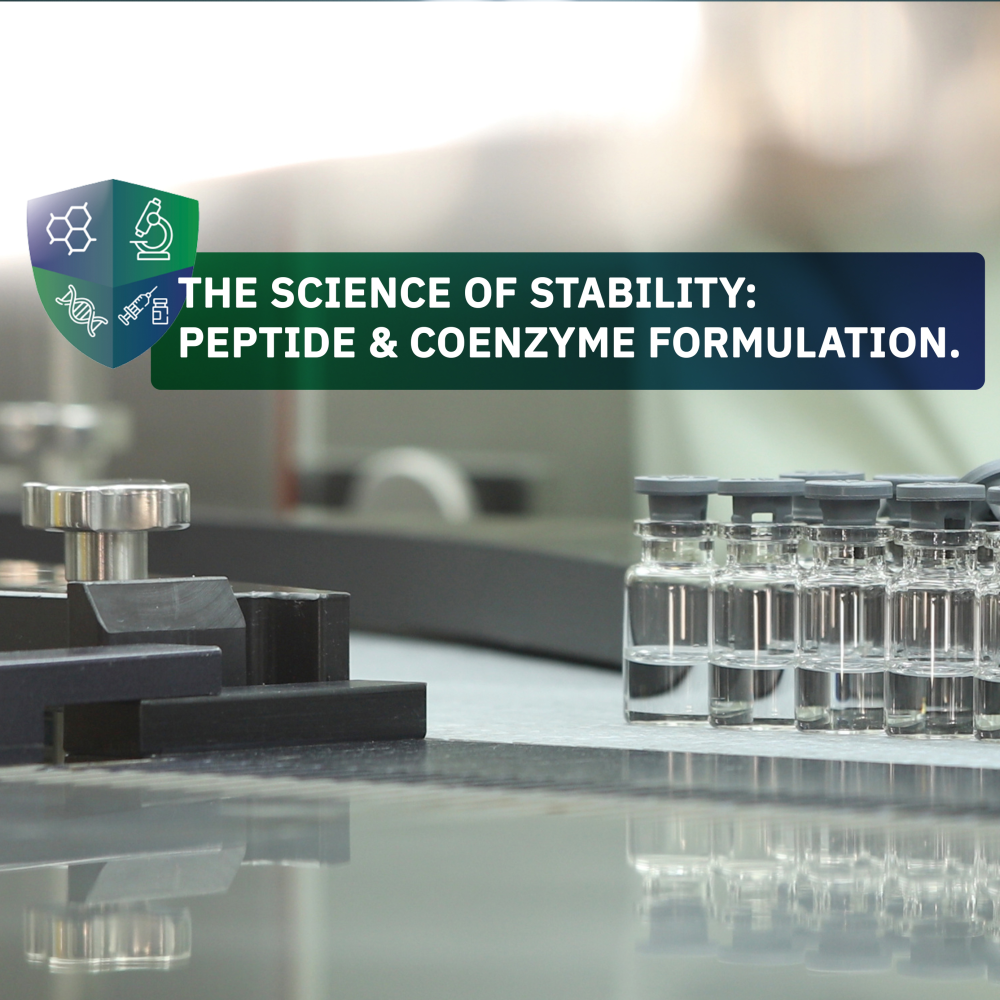
Peptide therapeutics and complex coenzymes represent one of the fastest-growing sectors in modern medicine. By bridging the gap between small-molecule drugs and large biologics, compounds like tripeptides and complex dinucleotides offer high target affinity and remarkable clinical benefits. However, translating a sensitive molecule into a stable, sterile, and commercially viable injectable presents significant physicochemical and manufacturing hurdles.
For bariatric clinics, longevity practices, and biotech firms, navigating these hurdles requires a highly integrated manufacturing partner. At Xseer Pharmaceuticals, our approach to formulating sterile injectables relies on rigorous pre-formulation screening, state-of-the-art aseptic processing, and continuous analytical validation within our FDA-registered 503B facility.
Here is an inside look at how we overcome the core challenges of manufacturing sterile, heat-sensitive therapeutics.
The Biochemical Hurdles of Peptide Stability
Complex molecules are inherently unstable outside of their native biological environments. When formulated as aqueous injectables, they are highly susceptible to both chemical and physical degradation pathways.
- Chemical Degradation (Oxidation & Hydrolysis): Complex molecules frequently undergo oxidation and hydrolysis. For example, master antioxidant tripeptides like Glutathione and critical cellular coenzymes like NAD+ are highly prone to rapid oxidation if not formulated within a highly controlled microenvironment. These reactions alter the molecular structure, leading to a loss of biological activity and reduced clinical efficacy.
- Physical Instability (Aggregation): Due to their specific molecular weights and structures, many therapeutic compounds are highly prone to non-covalent aggregation. This is often exacerbated by changes in pH, temperature fluctuations, or shear stress during the manufacturing process.
Addressing these degradation pathways requires a highly customized formulation strategy, as standard "platform" buffers rarely succeed with sensitive compounds.
Xseer Pharmaceuticals’ Optimization Strategy
Success in commercial-scale manufacturing is dictated by the rigor of the formulation phase. Xseer Pharmaceuticals' team begins every project with a comprehensive solubility and stability screen to establish the molecule's optimal microenvironment.
- Excipient Compatibility and Buffer Selection: To mitigate degradation, we conduct extensive screening of buffering agents and stabilizers. For oxidation-prone compounds like NAD+ or Glutathione, establishing the exact pH profile where the molecule exhibits maximum stability—without causing injection-site discomfort—is critical.
- Real-Time Analytical Feedback: Formulation development cannot occur in a vacuum. Xseer Pharmaceuticals utilizes a fully integrated, in-house analytical laboratory equipped with advanced HPLC and UPLC instrumentation. This allows our formulation scientists to receive immediate feedback on potency and impurity profiles, ensuring every batch meets exact specifications.
Aseptic Processing and Scale-Up
Because therapeutic peptides, complex coenzymes (like NAD+), and active B-vitamins (like Methylcobalamin and Hydroxocobalamin) are highly sensitive to heat, traditional terminal sterilization is not an option. They would be destroyed by the heat. Therefore, they must undergo strict aseptic processing.
Xseer Pharmaceuticals' cGMP manufacturing infrastructure is designed specifically to handle complex, heat-sensitive molecules:
- Aseptic Fill-Finish: Our facility utilizes ISO-class cleanrooms for the aseptic filtration and fill-finish of peptide solutions into vials or syringes.
- Environmental Controls: We maintain meticulous environmental monitoring and bioburden controls throughout the manufacturing process to eliminate contamination risks.
- 100% Batch Release Testing: Before any peptide batch is released for clinical or commercial use, it undergoes comprehensive testing. This includes USP <71> sterility testing (utilizing rapid microbial methods like ScanRDI® when accelerated timelines are required), USP <85> endotoxin testing, and precision potency assays.
By harmonizing formulation innovation with stringent regulatory controls, Xseer Pharmaceuticals ensures that complex therapeutics maintain their integrity from the compounding phase all the way through commercial distribution.
Frequently Asked Questions (FAQ)
Why do complex injectables require customized formulation strategies? Unlike basic small molecules, peptides (like Glutathione) and coenzymes have complex structures that are highly sensitive to their chemical environment. Changes in pH, ionic strength, or temperature can quickly lead to aggregation, hydrolysis, or oxidation, necessitating highly tailored buffer profiles.
How does Xseer Pharmaceuticals ensure the sterility of heat-sensitive compounds? Because therapeutics like NAD+, B12 variants, and amino acids degrade under the high heat of terminal sterilization, Xseer Pharmaceuticals utilizes strict aseptic processing. This involves sterile filtration of the solution and aseptic fill-finish operations conducted within ISO-class cleanrooms, supported by continuous environmental monitoring.
What analytical methods are used to verify molecular stability? Xseer Pharmaceuticals' in-house laboratory utilizes advanced liquid chromatography (HPLC/UPLC) for precision potency assays and impurity profiling, ensuring every vial meets exact label claims.
Ready to secure a reliable supply of premium therapeutics? Partner with a 503B facility that understands the science of stability. Utilize our Smart Routing system to Request a Consultation with Xseer Pharmaceuticals' technical and sales teams today.
“This content is for informational purposes only and does not constitute medical or regulatory advice.”