

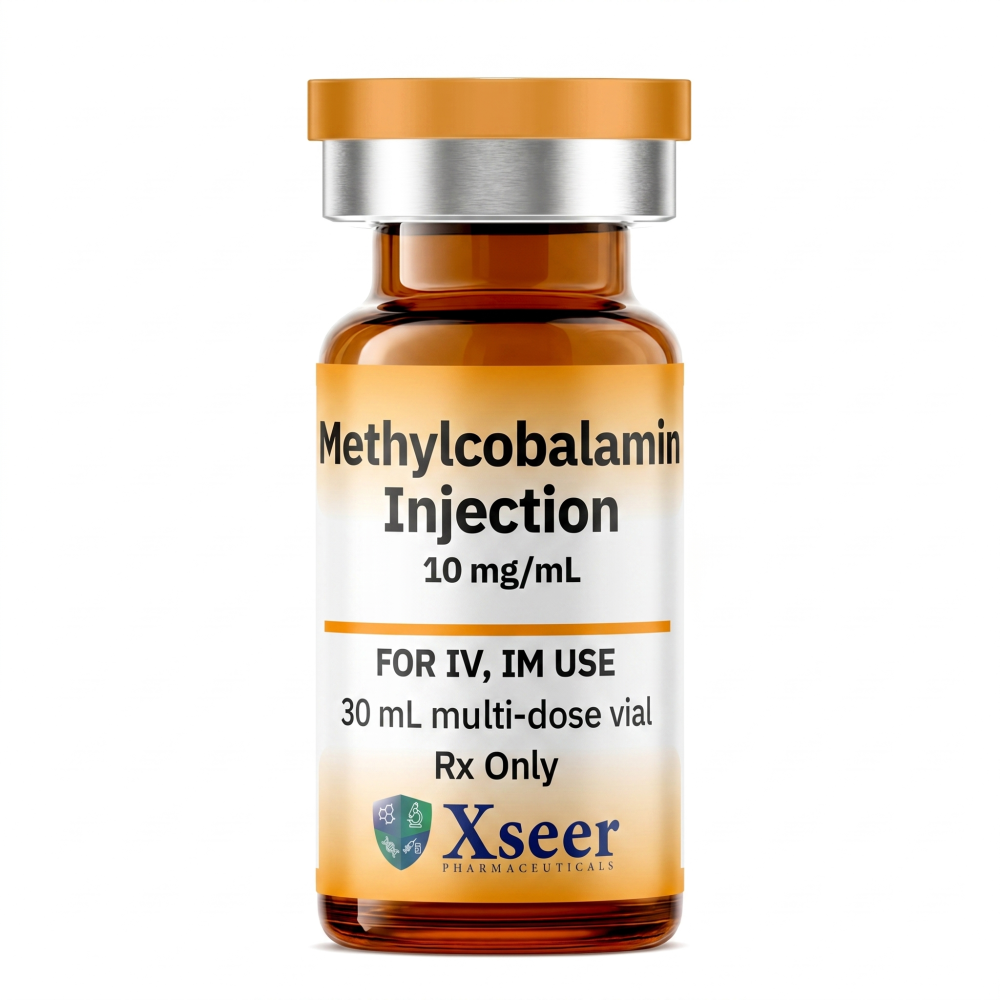
Methylcobalamin Injection (B12)
10 mg/mL
Size: 30 mLMethylcobalamin, also known as mecobalamin, is a metabolically active coenzyme form of vitamin B12. Vitamin B12 supports normal red blood cell formation, DNA synthesis, cellular metabolism, and the development, myelination, and function of the nervous system [1–3].
Sterile Methylcobalamin Injection is supplied as a concentrated 10 mg/mL solution in a 30 mL vial for intravenous or intramuscular administration by licensed healthcare professionals. The presentation is designed for office or clinical use under appropriate medical supervision.
Parenteral administration bypasses gastrointestinal absorption and may be appropriate when oral administration is unsuitable, absorption is impaired, or a clinician-directed protocol requires injectable vitamin B12. Dose, route, frequency, and duration should be individualized according to the underlying clinical condition, laboratory findings, and treatment response [1,2].
More About This Product
-
• Concentration: 10 mg/mL
• Volume: 30 mL Vial
• Route of Administration: Intravenous (IV) or Intramuscular (IM) Use
• Dosage form: Sterile injectable solution
• Administration setting: Office or clinical use; for administration by licensed healthcare professionals
Verify the prescribed dose, route, and corresponding administration volume before use. Because this is a concentrated formulation, small-volume doses should be calculated and independently checked before preparation.
For intravenous administration, dilution, compatible infusion solution, administration rate, and infusion duration should follow the product-specific label and validated institutional procedures. For intramuscular administration, select an appropriate injection site and avoid direct injection into blood vessels or peripheral nerves.
Inspect the solution and container before each administration. Do not use if the solution contains visible particulate matter, precipitation, unexpected discoloration, or if the vial or closure is damaged. Use strict aseptic technique during every vial entry, withdrawal, and administration.
-
Methylcobalamin serves directly as the cobalamin cofactor for methionine synthase. This enzyme transfers a methyl group from 5-methyltetrahydrofolate to homocysteine, producing methionine and regenerating tetrahydrofolate required for nucleotide synthesis and normal hematopoiesis [1–3].
Methionine can subsequently be converted to S-adenosylmethionine, a methyl donor used in numerous cellular reactions. The second human vitamin B12-dependent enzyme, methylmalonyl-CoA mutase, uses adenosylcobalamin; restoration of cobalamin status supports both vitamin B12-dependent metabolic pathways following intracellular processing [2,3].
-
Contraindications: Do not administer to patients with known hypersensitivity to methylcobalamin, another cobalamin compound, cobalt, or any component of the formulation.
Hypersensitivity: Serious hypersensitivity reactions can occur with parenteral cobalamin administration. Discontinue administration immediately and initiate appropriate medical treatment if rash, urticaria, facial or airway swelling, respiratory difficulty, hypotension, or anaphylaxis occurs [1,2].
Formulation-specific precautions: The 10 mg/mL concentration requires precise dose calculation and volume verification, particularly for small prescribed doses and pediatric administration. Compatibility and dilution should be confirmed before intravenous administration.
Clinical monitoring: Intensive correction of severe megaloblastic anemia may produce hypokalemia as erythropoiesis increases. Consider appropriate clinical and laboratory monitoring during the initial treatment period in patients with severe deficiency [2].
-
Long-term use of metformin, proton pump inhibitors, and histamine-2 receptor antagonists can reduce gastrointestinal vitamin B12 absorption and contribute to deficiency. These effects do not directly prevent administration of injected methylcobalamin [1,2].
Formal interaction studies have not been conducted for this compounded parenteral formulation. Concurrent medications and injectable products should be reviewed according to the patient’s clinical condition and the applicable administration protocol.
-
Reported or clinically relevant reactions may include:
Hypersensitivity: Rash, pruritus, urticaria, facial swelling, dyspnea, hypotension, or anaphylaxis
Injection site: Pain, tenderness, erythema, swelling, or induration
Gastrointestinal: Nausea, diarrhea, or abdominal discomfort
Neurologic: Headache, dizziness, or lightheadedness
General: Sensation of warmth, increased sweating, flushing, or malaise
Metabolic: Hypokalemia during rapid correction of severe megaloblastic anemia
Respiratory difficulty, facial or airway swelling, hypotension, or other evidence of a serious reaction requires immediate discontinuation and medical evaluation.
-
Pregnancy: Vitamin B12 requirements increase during pregnancy. Administer when clinically indicated and under the direction of a qualified healthcare professional [1,2].
Lactation: Vitamin B12 is present in human milk. Administration should be based on maternal clinical need and the importance of adequate vitamin B12 status for the breastfed infant [1,2].
Pediatric use: Safety and dosing have not been established specifically for this 10 mg/mL, 30 mL presentation. Carefully calculate and independently verify the prescribed administration volume.
Older adults: Evaluate medication-associated malabsorption, autoimmune gastritis, prior gastrointestinal surgery, dietary factors, neurologic status, renal function, and the anticipated need for maintenance therapy [1,2].
-
Store at USP Controlled Room Temperature, 20°C to 25°C (68°F to 77°F).
Protect from direct light and keep the vial in its original carton until use. Do not freeze.
Inspect the solution and container before each use. Do not use if the solution contains visible particulate matter, precipitation, or unexpected discoloration.
Use strict aseptic technique during vial entry and product withdrawal. Follow the product-specific label and applicable facility procedures for handling after initial puncture, beyond-use dating, and disposal.
Keep out of the reach of children.
-
[1] National Institutes of Health, Office of Dietary Supplements. Vitamin B12: Fact Sheet for Health Professionals. Updated July 2, 2025.
[2] Green R, Allen LH, Bjørke-Monsen AL, et al. Vitamin B12 deficiency. Nat Rev Dis Primers. 2017;3:17040. doi:10.1038/nrdp.2017.40.
[3] Mascarenhas R, Gouda H, Ruetz M, Banerjee R. Human B12-dependent enzymes: methionine synthase and methylmalonyl-CoA mutase. Methods Enzymol. 2022;668:309–343. PMID:35589199.
-
This information is intended for licensed healthcare professionals and is provided for product-information purposes only. Refer to the product-specific label, lot-specific Certificate of Analysis, applicable institutional protocols, and independent clinical judgment before ordering, preparing, or administering this compounded drug product.